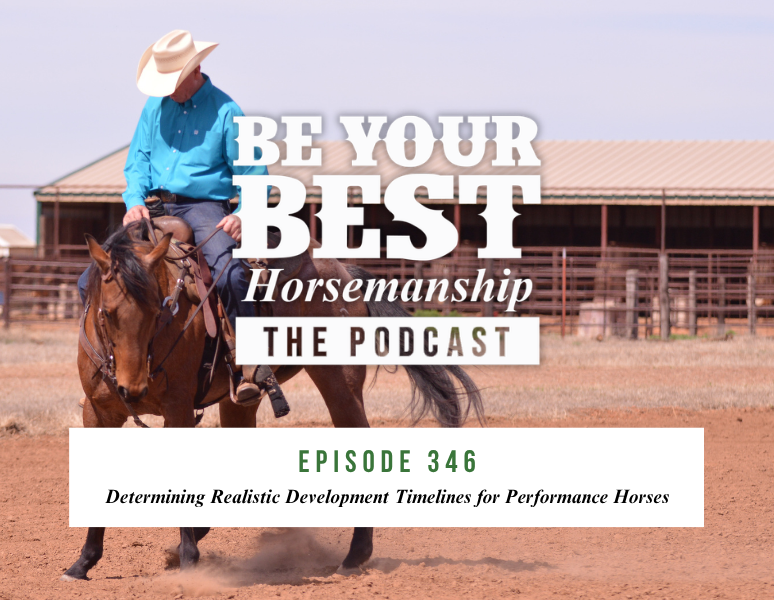
Ep 346: Determining Realistic Development Timelines for Performance Horses
If there's one question I've been asked throughout my career more than just about any other, it's this:
"What do you think this horse is going to be?"
Sometimes that question comes just days after a horse arrives in training. Other times it comes after a month or two. And while I understand why owners want answers, the truth is that some horses simply need more time before you can honestly evaluate what they're capable of.
Today's Horses Mature Differently
Through generations of selective breeding, we've produced some incredibly athletic horses. Physically, many of today's prospects look mature at a very young age. A yearling can have the size and athletic appearance of what used to be a much older horse.
But while their bodies may mature quickly, their minds often don't. Confidence, emotional maturity, trust, and understanding still take time to develop. That's the part of the process you can't rush. As trainers, we have to remember that we're developing the whole horse—not just the physical athlete.
Don't Judge a Horse Too Early
I've got horses in my program that remind me of this lesson every day. One gelding I started was unbelievably insecure. Everything worried him. You couldn't completely relax because he was constantly looking for something to be afraid of. There were some really difficult days early on, and honestly, there were times when it would've been easy to think he just wasn't going to make it.
Fast forward several months, and he's become a completely different horse. He's confident. He's progressing. He's showing the athletic ability that was there all along—it just took time for his mind to catch up to his body. That's why I've learned to be very careful about making early judgments.
Understanding Each Horse’s Strengths and Weaknesses
Every horse brings a different set of genetics to the table. Some inherit tremendous confidence. Others inherit a little more anxiety or sensitivity. Some are naturally skeptical of new situations. Others take everything in stride. Those personality traits don't necessarily determine whether they'll become great horses—they simply determine how much time and patience they'll need along the way.
You can't force insecurity out of a horse. In fact, trying to force confidence almost always creates more anxiety. Instead, our job is to consistently build trust, understanding, and positive experiences until those horses begin believing in themselves.
Some Horses Simply Need More Time
I always think back to a story legendary calf roper Mike Johnson once shared with me. He told me about a mare that he and his wife tried to sell for a couple thousand dollars for years. Nobody wanted her. So, they kept riding her. Eventually that same horse developed into an NFR barrel horse.
Think about that for a minute.
If they'd judged her too early—or if someone else had—they never would've discovered what she was capable of becoming. Stories like that happen more often than people realize. Not every horse is going to peak at four years old. Some don't truly become themselves until they're seven, eight, or even older.
Progress Isn't Always Linear
Training isn't a straight line. Some days you'll feel like you're making huge strides. Other days it feels like you've gone backwards. That's normal.
The horses I'm riding today are all on different timelines. Some are nearly ready for their next home. Others need another year of riding before I'll feel comfortable putting my name behind them. That's okay.
The toughest horses usually stay with me the longest. Not because I enjoy making things harder on myself—but because I want to give those horses every opportunity to succeed before I make a decision about their future.
Learn to Separate Personality from Potential
Every horse has quirks. Some hesitate at trailer ramps. Some don't like stepping on rubber mats. Others are naturally more alert or reactive than their pasture mates. Not every quirk needs to become a battle.
Part of becoming a better horseman is learning which issues truly affect performance and safety—and which ones are simply personality traits you manage instead of trying to eliminate.
We're not trying to create robots. We're trying to develop confident, willing athletes.
Resilience Matters for Trainers, Too
One lesson this business teaches better than almost any other is resilience.
There isn't a magic timeline that tells you exactly when to keep going or when to move on. Every horse is different. Every situation is different.
Sometimes staying the course is the right decision. Sometimes it isn't. But before you decide a horse doesn't have enough ability, ask yourself an honest question: Have I really given this horse enough time to develop?
Stay Committed to the Process
The horses we have today possess incredible athletic ability. Our challenge isn't creating talent—it's giving that talent enough time to mature.
The best trainers aren't necessarily the ones who can predict greatness after five rides. They're the ones willing to stay patient through the difficult days, remain consistent in their program, and continue building confidence one ride at a time.
Sometimes the horse that tests your patience the most early on ends up becoming the one you're most proud of later. Stay the course. Stay consistent. Give them the time they need. You might be surprised by what they're capable of becoming.