One thing about horses is that they always have a way of keeping you humble.
No matter how many years you've been doing this, how many horses you've started, or how much experience you've got, horses have a way of reminding you that there's always something to learn. Sometimes those lessons come easy, and sometimes they come with a few bruises attached.
Recently, I had one of those reminders—a horse I've been riding for quite a while had a reactive moment that resulted in me getting bucked off. Looking back, it wasn't because he was a bad horse. It wasn't because he was mean. It wasn't because he had suddenly developed a training issue. It was a perfect example of how quickly things can happen when preparation gets replaced by assumption.
Never Assume Today Will Be Like Yesterday
One of the biggest mistakes we can make around horses is assuming that because everything went well yesterday, it's automatically going to go well today.
Horses don't think that way. They're living in the moment. They're responding to how they feel physically, mentally, and emotionally right now. If something feels different to them, they're going to react to it. As horsemen, our job is to recognize that possibility and prepare accordingly.
The older I get, the more I realize that safety often comes down to a few extra minutes of preparation. A little groundwork. A little movement. A quick check to make sure everything feels right before stepping into the stirrup. Sometimes those extra few minutes can prevent a situation that takes weeks—or months—to recover from.
Understanding Reactive Horses
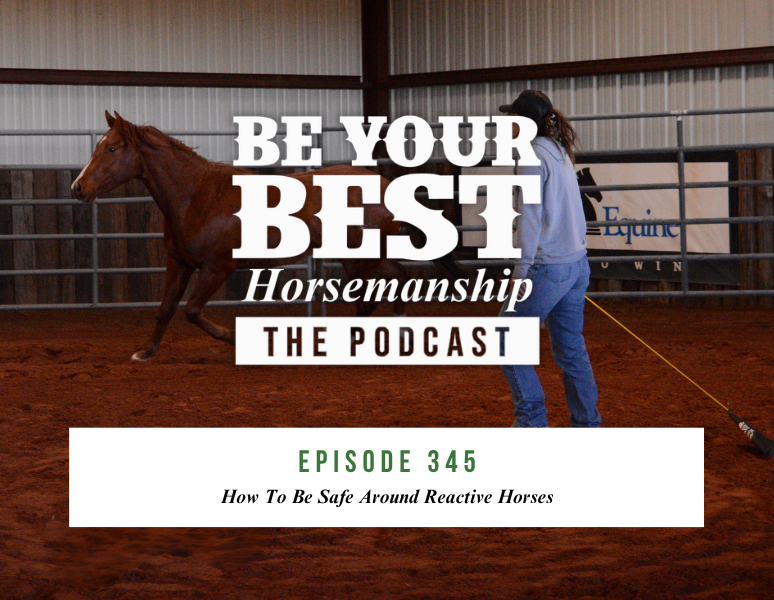
A reactive horse isn't necessarily a dangerous horse. In fact, many of the most talented horses you'll ever ride are also some of the most reactive. They're quick-footed. They're athletic. They have a lot of feel. They notice everything. The same qualities that make them talented performance horses can also make them more sensitive to changes in their environment, equipment, physical comfort, or rider cues.
The challenge is learning how to manage that sensitivity without creating more tension. When a reactive horse feels trapped, surprised, or uncertain, they can switch from the thinking side of their brain to the reactive side very quickly. Once that happens, they're no longer processing information the same way. They're simply trying to protect themselves. That's why preparation matters so much.
Preparation Creates Safety
One lesson I've learned over the years is that safety starts long before you ever swing a leg over a horse. Before I step on a horse—especially a young horse or one that's naturally sensitive—I want to know where their mind is. Are they relaxed? Are they paying attention? Are they soft and responsive? Can I move their feet and get them thinking?
Anything we can do to engage the thinking side of a horse's brain before we ride improves our chances of having a productive and safe session. A few minutes on the lead rope. Moving their feet. Softening different body parts. Making sure they're mentally connected before we ever ask them to carry us. Those things may seem simple, but they make a tremendous difference over time.
Confidence Can Be Lost Quickly
One thing that doesn't get talked about enough is how quickly confidence can disappear. We spend months building confidence in a horse, and sometimes a single event can shake that confidence. The same thing happens with riders.
After an accident or a scary moment, it's easy for both horse and rider to become reactive. The horse anticipates something bad happening. The rider starts anticipating something bad happening. Pretty soon you've got two nervous individuals feeding off each other.
That's why rebuilding confidence is every bit as important as fixing the original issue. The answer isn't to force your way through it. The answer is to slow down, return to your fundamentals, and create enough positive experiences that both horse and rider begin trusting each other again.
Learn From It and Move Forward
One of the biggest differences between successful horsemen and frustrated horsemen is how they respond to mistakes. When something goes wrong, it's easy to get angry. It's easy to blame the horse. It's easy to get discouraged. But if we're truly students of the game, we have to be willing to ask ourselves a different question: "What can I learn from this?"
Every setback contains information. Every mistake contains a lesson. Every challenge gives us an opportunity to improve our preparation, our communication, and our understanding. The horse industry keeps getting better because horsemen continue learning from one another's experiences. We don't all have to attend the School of Hard Knocks personally if we're willing to pay attention to the lessons others have already learned.
How to Bounce Back From Reactive Moments
At the end of the day, horsemanship is about managing risk, building trust, and helping horses stay on the thinking side of their brain. No matter how experienced we are, it's important to remember that horses are living creatures—not machines. They have good days, bad days, sore days, uncertain days, and reactive days.
The best thing we can do is slow down, prepare thoroughly, stay consistent, and never assume that today's ride will automatically look like yesterday's. Because often, the difference between a productive training session and a wreck comes down to a few extra minutes spent doing the little things right.
Be safe out there, keep learning, and remember that every horse has something to teach us if we're willing to listen.