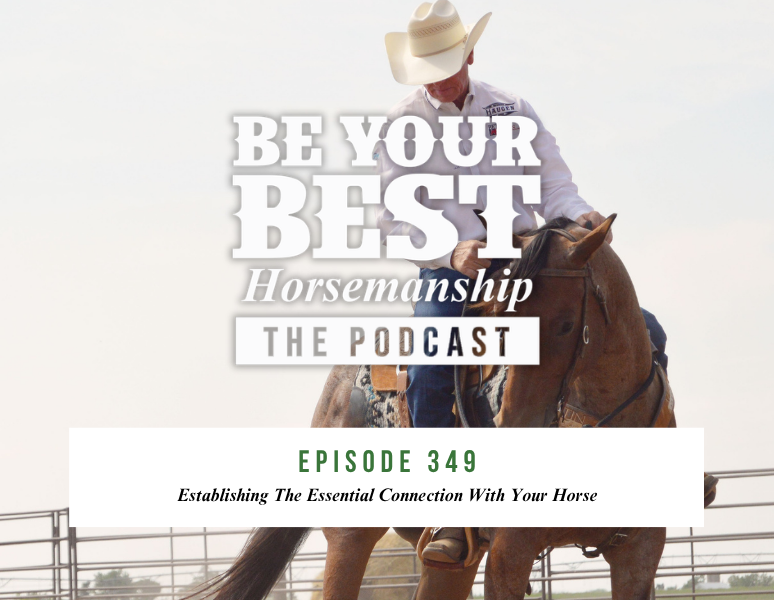
Ep 349: Establishing The Essential Connection With Your Horse
When people think about training horses, they often focus on the physical side of things—getting a horse softer in the bridle, improving transitions, refining stops, or adding speed.
But none of those things matter if you don't have one thing first: Connection.
Mental connection is what makes everything else possible. It's what allows a horse to trust you, listen to you, and confidently look for the answer you're asking for. Without it, training becomes less about communication and more about manipulation.
The better your connection, the better every other part of your horsemanship becomes.
Connection Comes Before Control
One of the conversations I had recently with one of my interns centered around a simple but important idea.
Before we ask a horse to do more, go faster, or handle greater pressure, we have to establish a genuine connection.
That means the horse is paying attention. It means they trust you. It means they have confidence in you.
Only after you establish that connection can you begin building true control. Control isn't about forcing a horse to do something. It's about asking for a response in a way the horse understands, then rewarding that response with a timely release.
When a horse understands your signals and trusts the release that's coming, they begin searching for the right answer instead of resisting it. That's when training starts becoming a conversation instead of a battle.
Speed Reveals the Strength of Your Foundation
It's relatively easy to have a horse connected at a walk or jog. The real test comes when you begin adding speed.
As you ask a horse to lope faster, make quicker transitions, or work cattle, any weakness in your communication starts to show. If the horse loses focus or confidence when things speed up, it usually isn't a speed problem—it's a connection problem.
That's why I always tell people not to rush the process. Build the connection first. Then add control. Only then should you begin asking for more speed. When those three pieces develop together, your horse gains confidence instead of anxiety.
We Need to Change Before the Horse Does
One thing I love about horses is that they'll humble you.
I've got a couple young horses in training right now that are naturally a little more reactive. They've got plenty of talent, but they're watchy, sensitive, and every once in a while they'll get a little anxious.
For a while, I found myself approaching those horses the same way I approached some of the others. Then it hit me—it wasn't the horses that needed to change first. It was me.
I adjusted how I connected with them. I slowed things down, became more intentional with my communication, and focused more on building confidence than simply getting through the day's work.
The difference was immediate. Their confidence improved because my approach improved.
That's a good reminder that no matter how many years we've been doing this, we're never finished learning. Sometimes becoming a better horseman simply means being willing to adjust when a horse tells you they need something different.
Listen to Your Horse, Not the Calendar
One of the questions my intern asked me recently was about using draw reins with one of our horses.
The mare had a tendency to brace against the bridle before finally giving to the pressure. The draw reins were simply a temporary tool to help her understand where the release was.
Her question was: "How do you know when it's time to take them off?"
My answer was simple. “Listen to the horse.”
If the horse is consistently putting slack in the bridle instead of pushing against it, they're telling you they're beginning to understand. That's the time to see where they're at without the extra equipment.
Too often people rely on timelines instead of paying attention to what the horse is communicating.
The horse will tell you when they're ready—if you're willing to listen.
That's true with any training aid. Tools can be incredibly valuable when they're used correctly, but no tool replaces good timing, feel, and understanding.
Connection Happens Through the Small Details
One of the biggest things I've been working on lately is making sure my horses stay mentally connected during every part of a run.
Recently I spent an entire training session running cattle without ever picking up my rope.
Everything was about body position. Scoring correctly. Running straight. Melting into the stop. Standing quietly afterward.
I wanted my horses to learn that the reward wasn't just catching something—it was finding relaxation.
After every stop, I'd simply let them stand. I wanted them to breathe. Relax. Enjoy the release.
When you reward at the correct time, horses begin searching for that feeling. They stop anticipating pressure and start looking for softness instead. Those little moments build confidence far faster than simply making another run.
Training The Whole Horse, Not Just One Part
As horses progress, it's easy to become focused on the event you're training for. But some of the most valuable rides have nothing to do with roping or pattern work.
After roping on a couple horses this week, I put two younger horses back in a snaffle and spent the session working on fundamentals.
We loped squares before circles. We worked on backing. Changing directions. Moving every part of the body independently. Getting soft in the face. Listening to both legs.
Those simple exercises build body control, balance, and responsiveness that carry over into everything else they'll ever do.
A horse that can control all five body parts with confidence becomes much easier to guide, whether you're heading into a run, working cattle, or simply asking them to make a better turn.
Mental Softness Creates Physical Softness
One thing I see often when helping riders is horses that become defensive anytime a rider uses their legs.
The horse isn't trying to be difficult. They're trying to protect themselves because they don't fully understand the pressure.
When we slow down, improve our timing, and communicate more clearly, that defensiveness begins to disappear.
The horse becomes softer mentally first. Then they become softer physically.
That's why connection has to come before refinement. You can't force softness. You create the environment where the horse feels confident enough to offer it.
Great Horsemanship Is Built One Connection at a Time
Every horse has different strengths. Every horse has different challenges. But they all need the same thing before they can truly progress: A rider they understand.
When you focus on building that connection first, everything else—speed, control, confidence, and performance—has a much stronger foundation to grow from.
At the end of the day, horsemanship isn't about seeing how much you can make a horse do. It's about building a relationship where they want to do it with you.