Every season asks something different of you as a horseman. In the spring, horses are fresh and full of energy. In the fall, cooler temperatures make it easier to put in long days. But summer, especially here in Oklahoma, is different.
When you're working horses in triple-digit heat day after day, you can't train the same way you do in October. Your horses feel different. You feel different. And if you ignore that, both you and your horses are going to pay for it.
You're a Different Trainer in Different Seasons
One thing that really stood out to me recently was realizing that I'm not the same trainer in July that I am in October. My energy is different. My timing is different. My feel is different. And if my feel is different, my horses are going to respond differently because they're reading me every second I'm on their back.
That's something we don't always think about. We tend to blame the horse when things don't feel quite right, but sometimes the first question we should ask is:
"Am I riding differently today?"
The answer is often yes. The weather affects all of us, and our horses feel those changes just as much as we do.
Heat Changes More Than Energy Levels
Recently I noticed a couple of geldings starting to feel a little sluggish. They're good horses. Gentle. Willing. Athletic. But their feet just weren't as sharp as they normally are.
At first glance, you might think the answer is to push them harder. I don't think that's the answer.
What I realized was that they, and probably me too, were simply feeling the effects of weeks of extreme heat.
When it's hot before daylight and still hot after the sun goes down, everybody naturally starts conserving energy. That's normal. As trainers, we have to recognize the difference between a horse being lazy and a horse simply being physically taxed by the environment.
Train the Mind, Not Just the Body
One mistake that's easy to make this time of year is trying to wear a horse out. I've learned over the years that physically exhausting a horse doesn't necessarily improve the training. In fact, sometimes it does just the opposite.
When horses become overly fatigued, they quit thinking. Once they quit thinking, they're much more likely to become defensive, reactive, or simply shut down mentally. That's never the goal.
I want a horse that's engaged mentally; not one that's too tired to respond. Sometimes the best training session is the one where you accomplish one or two things really well and then call it a day. There's nothing wrong with leaving a horse wanting a little more.
Trust Is Built When You Listen
One thing I appreciate about horses is that they'll tell you how they're feeling if you're paying attention. Maybe their feet aren't moving with the same energy. Maybe they're slower to respond. Maybe they're mentally checked out. Those are conversations, not problems.
Instead of asking, "How do I make this horse work harder?"
Ask yourself: "What is this horse trying to tell me?"
Listening doesn't mean lowering your standards. It means adjusting your expectations to fit the situation while still reinforcing the fundamentals. That's part of good horsemanship.
Don't Create a Defensive Horse
I also had a conversation recently with a friend about a young colt that had become reactive after coming home from a colt starter.
My advice wasn't to push through it. It wasn't to get tougher. It was to back up and rebuild the foundation.
When horses become defensive, it's usually because somewhere along the way they lost confidence. The answer isn't to tiptoe around them. But it's also not to overwhelm them. It's to put them in situations where they can succeed.
Build trust. Build understanding. Build confidence. Then repeat it until that becomes the horse's new normal.
Preparation Starts on the Ground
One point I can't emphasize enough is that the preparation you do before you ever step into the stirrup matters.
If a horse isn't soft, confident, and connected on the ground, why would we expect them to suddenly become comfortable once we climb on their back?
Groundwork isn't about checking a box. It's about creating enough trust that the horse already understands your communication before the pressure of carrying a rider enters the picture. The stronger your foundation, the smoother everything else becomes.
Summer Is a Time to Be Intentional
This time of year isn't about proving how much you or your horse can endure. It's about being smart.
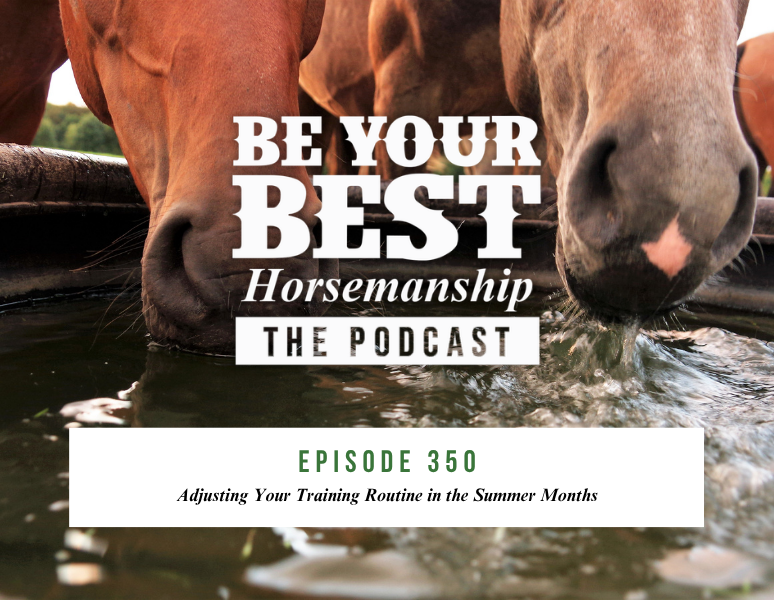
Ride early. Keep horses hydrated. Know when enough is enough. Protect both your horse's body and their mind.
Some of the best decisions you'll make this summer won't be adding another ten minutes to a ride—they'll be recognizing when you've accomplished what you needed to accomplish and putting your horse away while they're still confident.
Good Horsemanship Adapts
The longer I train horses, the more I realize that good horsemanship isn't rigid. It adapts.
The fundamentals stay the same, but how we apply them changes with the horse, the environment, and the season. Some days call for longer sessions. Some days call for shorter ones. Some days the biggest win is simply keeping a horse mentally engaged while asking a little less physically.
At the end of the day, our job isn't to see how much work we can get out of a horse. Our job is to build a horse that trusts us, has confidence in us, and wants to come back tomorrow ready to learn again.
When you prioritize that—especially during the toughest days of summer—you'll build a foundation that lasts far longer than any single training session ever could.