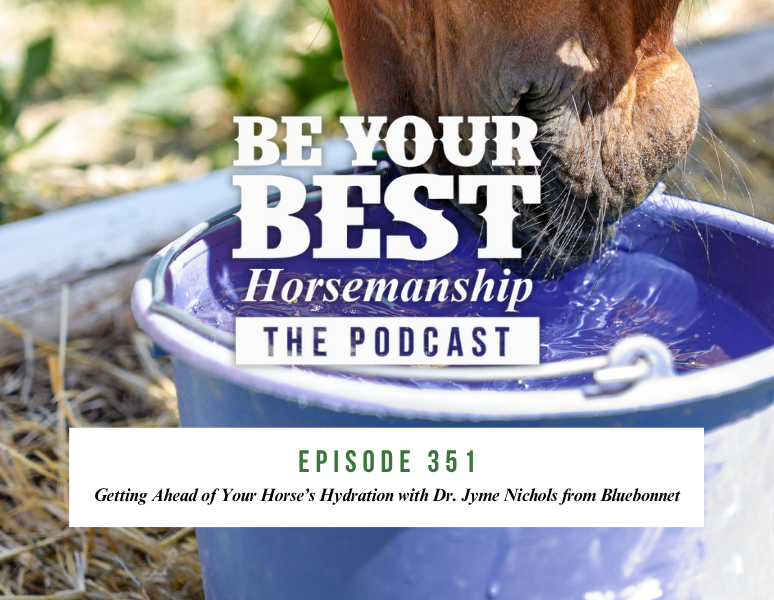
Ep 351: Getting Ahead of Your Horse’s Hydration with Dr. Jyme Nichols from Bluebonnet
Summer places a different kind of demand on our horses. As trainers, we naturally focus on adjusting our riding schedule when the temperatures climb. We ride earlier in the morning, shorten some workouts, and pay closer attention to recovery. But one area that's easy to overlook is nutrition—specifically hydration.
On this episode of Be Your Best Horsemanship, I sat down with equine nutrition expert Dr. Jyme Nichols from Bluebonnet Feeds to talk about how nutrition and hydration work together during the hottest months of the year.
One of the biggest takeaways from our conversation was this:
Hydration isn't something you react to after your horse is dehydrated. It's something you prepare for every day.
Just like good horsemanship, good nutrition is about staying ahead of problems instead of trying to fix them after they happen.
Making Seasonal Adjustments to Your Feeding Program
One of the most interesting insights Dr. Jyme shared during our conversation was how the horse's digestive needs adapt in different seasons.
During the winter, one of the best ways to help a horse stay warm is by increasing forage intake. As hay ferments in the hindgut, it naturally generates heat, almost like an internal furnace.
On the other hand, during the summer, temperatures climb and horses often begin eating less hay—not because they're being picky, but because their bodies are trying to reduce that internal heat production. Less forage means less fermentation, which means less body heat.
The challenge is that when forage intake decreases, several other things can happen as well. Your horse may consume less water through their feed. Digestive function can change. They may take in fewer electrolytes naturally. Before long, you've got a horse that's beginning to fall behind nutritionally without any obvious signs.
Dr. Jyme emphasized that feeding programs shouldn't stay the same year-round. Just like we adjust our training schedules for the season, we should also be evaluating our nutrition program to make sure it's supporting what our horses need during periods of extreme heat.
Hydration Is More Than Drinking Water
Most of us judge hydration with one simple question: "Is my horse drinking enough?" While that's certainly important, Dr. Jyme explained that hydration goes much deeper than simply consuming water.
Water has to move into the cells where it's actually used. That process depends on maintaining the proper balance of electrolytes and minerals throughout the body.
In other words, a horse can drink plenty of water and still not be optimally hydrated if that electrolyte balance isn't there. That's why electrolyte supplementation can become especially valuable during periods of heavy sweating, hauling, long competition weekends, or prolonged heat exposure. Rather than waiting until a horse is depleted, the goal is to maintain that balance consistently so they're prepared before the stress ever begins.
Salt and Electrolytes Aren't the Same Thing
Another helpful distinction Dr. Jyme made was the difference between salt and a complete electrolyte program.
Salt serves an important purpose because it encourages horses to drink. It stimulates thirst, which is exactly what we want during hot weather.
Electrolytes take that one step further. They help replace the minerals lost through sweat and support the body's ability to utilize the water the horse is consuming.
Both have a role, but they're not interchangeable.
For horses in regular work, especially those hauling and competing through the summer months, considering both parts of that equation can make a significant difference in recovery and overall performance.
Don't Overlook Your Horse's Water Source
Horses can be surprisingly particular about water. Automatic waterers that sit in direct sunlight may become warmer than we'd expect. Water tanks that haven't been cleaned regularly can become less appealing. Even when water is technically available, some horses simply won't drink enough if they don't like it.
In group turnout situations, dominant horses may also prevent lower-ranking horses from drinking comfortably. Little details like cleaning tanks frequently, providing multiple water sources, and paying attention to water temperature can encourage horses to drink more consistently throughout the day.
Sometimes improving hydration isn't about adding supplements at all—it's simply making fresh, clean water easier for every horse to access.
Preparing Horses for Hauling and Competition
Travel creates another layer of stress that often gets overlooked. Some horses don't like the taste of unfamiliar water when they're away from home. Others simply don't drink enough while hauling. Some stop eating hay altogether once they're in the trailer, which creates an entirely different set of digestive challenges.
Dr. Jyme shared several practical ideas that can help prepare horses before those situations arise.
Offering wet mashes can increase water intake while providing additional nutrition.
Flavoring water at home before introducing that same flavor on the road can help encourage horses to drink unfamiliar water.
Even simple trailer management—like wetting shavings or using ice to help reduce trailer temperatures—can contribute to overall comfort during long hauls.
Again, the common theme wasn't reacting after the fact. It was preparing beforehand.
Forage Is Still the Foundation
No matter what supplements or specialty products are available today, one thing hasn't changed: Quality forage is still the foundation of every feeding program.
Healthy forage supports digestive function, provides a steady source of fiber, helps maintain hindgut health, and gives horses something they're naturally designed to consume throughout the day.
When forage quality declines—or intake decreases because of extreme heat—we have to be more intentional about supporting the rest of the nutritional program. Dr. Jyme stressed that every feeding decision should build upon that foundation rather than trying to replace it.
Supporting Recovery During the Summer
We also talked about some of the nutritional tools available for horses during periods of increased stress.
For horses in regular work, feeds formulated with everyday electrolyte support, such as Intensify® Omega Force®, can help maintain hydration before problems develop.
During periods of increased demand—whether that's hauling, multiple days of competition, or extreme heat—additional recovery products designed specifically for hydration and electrolyte replacement may be appropriate to help replenish what the horse loses through sweat.
We also discussed nutritional support for horses experiencing travel stress or digestive challenges. Horses that don't eat well while hauling may benefit from additional gastrointestinal support to help protect stomach health until they're back into a normal feeding routine. Likewise, functional nutrition designed to support immune health can be valuable before stressful events rather than waiting until a horse begins feeling run down.
Like every other aspect of horse care, these products work best when they're part of a thoughtful management program—not a last-minute solution after problems have already developed.
Great Horsemen Stay Ahead of Problems
One reason I enjoyed this conversation so much is because Dr. Jyme's approach to nutrition mirrors the philosophy I try to apply in my horsemanship: Preparation matters.
We don't wait until a horse loses confidence before we build a better foundation.
We don't wait until a horse develops bad habits before improving our communication.
Nutrition is no different.
The best hydration programs begin before the first hot day.
The best recovery programs begin before the first competition.
The best feeding programs evolve with the seasons instead of staying the same all year long.
Preparation Is Part of Horsemanship
As horsemen, it's easy to think our job begins when we step into the saddle. The reality is, many of the most important decisions we make happen long before that.
How we feed. How we manage turnout. How we prepare for hauling. How we support recovery. How we adjust to changing seasons.
Those decisions all influence how our horses feel physically and mentally, and ultimately how successful they'll be in training and competition.
The better we prepare our horses before stress arrives, the better they'll be able to handle it when it does.
And that's really what good horsemanship is all about—doing the little things consistently, long before they become big things.