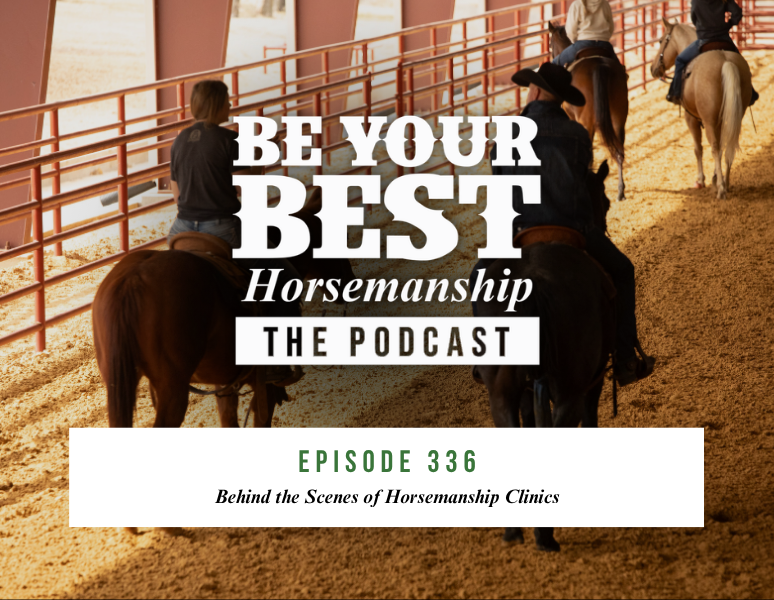
When people ask me what we actually do at a horsemanship clinic, I think sometimes they’re expecting a long list of drills or step-by-step instructions on how to fix a specific problem.
And sure, we do cover exercises. We’ll work on softness, transitions, body control, all of that. But the truth is, what we do in a clinic is a lot simpler than people expect—and at the same time, a lot deeper.
At the core of it, everything we do comes back to better communication and better leadership between you and your horse. That’s really what horsemanship is.
What You Really Learn at a Horsemanship Clinic
I don’t try to make this complicated, because it doesn’t need to be. When I explain it at the start of a clinic, I break it down into two parts. First is communication—that’s your feel, your timing, your balance, the signals you’re giving your horse. Second is leadership—that’s once your horse understands what you’re asking, now you guide them through it.
It’s like getting a horse ready to turn or stop. The preparation—that’s communication. The follow-through—that’s leadership. Both matter, and you need both working together.
But before any of that really starts to make sense, you’ve got to understand the horse.
Training the Mind First, Then the Body
Every horse we’re working with has a body and a mind, and both matter just as much.
From a body standpoint, I simplify it down to five key areas: the head, neck, shoulder, rib cage, and hindquarters. If we can’t influence and organize those five parts, we’re going to struggle to get consistent results.
But even more important than that is the mind. Because a horse really only has two ways of thinking. They’re either in a thinking mode, or they’re reacting.
They’re either calm, processing, and looking for the answer—or they’re defensive, anxious, and in that flight mode.
And once you understand that, you start to see everything differently. Because your job isn’t just to move their feet—it’s to get their mind in the right place first.
Why Your Horse’s Behavior Is a Reflection of Your Communication
One of the biggest things people take away from clinics is realizing just how much their horse is responding to them in the moment.
Every response you get from your horse is based on what they feel from you right then. Not yesterday. Not last week. Right now.
So when something isn’t working, that’s not necessarily a bad thing. That’s feedback. That horse is telling you, “I don’t quite understand what you’re asking,” or “that didn’t feel clear to me.”
And that’s where we start making progress—when you learn to listen to that instead of getting frustrated by it.
Every Horse and Rider Combination Is Different
Another thing we talk about a lot is how every horse is different, and every rider is different.
There’s no such thing as a horse that just works the same for everyone. Even the best-trained horse still has to figure out how you communicate. They have to get used to your timing, your feel, your balance.
So in a clinic setting, it’s not about trying to make every horse look the same. It’s about helping each rider understand their horse better, and helping that horse understand them better.
Building a Strong Foundation in Horse Training
Something else I stress quite a bit is that foundation is built daily.
A lot of people think once they’ve put in the work, it should just stay there. But the reality is, every time you step in the stirrup, you’re starting fresh. That horse is going to respond off what they feel from you that day.
If your timing is off or your focus isn’t there, you’re not going to get the same response, even if you did everything right the day before.
That’s why consistency matters so much. Clear, repeatable signals build confidence. And confident horses are what we’re after.
Progress Over Perfection in Horsemanship Training
We also spend a lot of time talking about expectations, because this is where people get themselves, and their horses, in trouble.
Everybody wants to be further along than they are. That’s just human nature. But the reality is, good horses take time. A lot of time.
You’re not building the horse you want in a few months. For most people, you’re looking at years, and hundreds of quality rides before that horse really becomes what you had in mind.
And when we ignore that and try to rush it, that’s when frustration shows up. That’s when people start forcing things, getting discouraged, or skipping steps.
So we talk a lot about being realistic. Where are you right now? Where do you want to go? What’s your plan? And does your timeline actually make sense?
Because if it doesn’t, that’s going to create problems—both for you and your horse.
How to Improve Control, Softness, and Feel in Your Horse
As we get deeper into a clinic, we’ll start working more on things like softness, frame, and collection. And really, all of that comes back to one key idea—control of the feet.
If you can position your horse’s body correctly, and get them connected mentally, then controlling the feet becomes easier. And once you can control the feet, everything else starts to fall into place.
That was a big turning point for me in my own horsemanship, and it’s something I see click for people in clinics all the time.
Why Horsemanship Clinics Help Riders Improve Faster
At the end of the day, clinics aren’t just about learning new exercises.
They’re about learning how to think differently. How to communicate more clearly. How to recognize what your horse is telling you and make adjustments.
And I’ll be honest with you—I learn something every time I teach one. Sometimes it’s from explaining something a different way, sometimes it’s from watching someone else work through it. But there’s always something there.
That’s part of staying sharp. That’s part of continuing to grow.
Becoming a Better Horseman Starts with You
If there’s one thing I want people to take away from behind the scenes of these clinics, it’s this:
It always comes back to you.
The better you get—your feel, your timing, your understanding—the better your horse is going to get.
So start where you are. Be realistic. Stay consistent. And just keep working to get a little better every day.
Because that’s really what this whole journey is about.