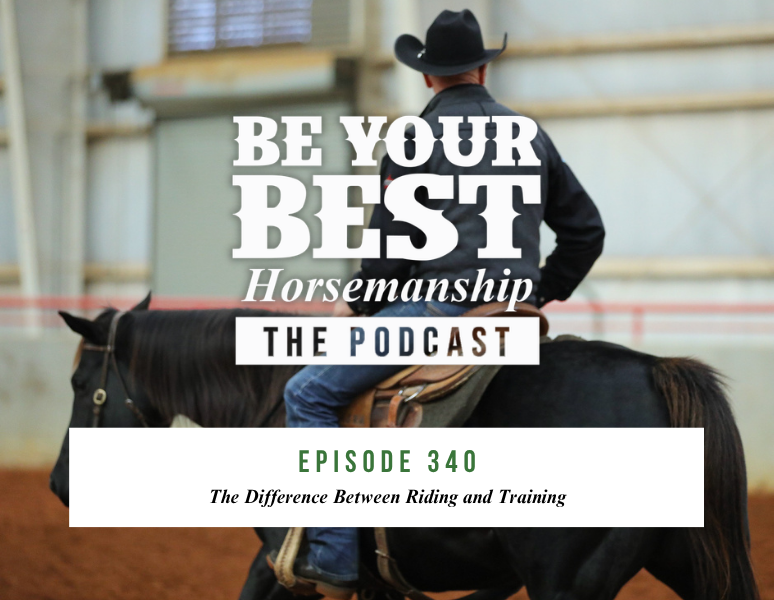
Ep 340: The Difference Between Riding and Training
There’s a big difference between simply riding horses and actually training them. That’s something I’ve been thinking about a lot lately as we work through a strong set of young horses here at the place. Our two-year-olds are riding good, the three-year-olds are progressing nicely, and the four-year-olds are really starting to come into their own across multiple disciplines. But looking at them the other day reminded me of something important: great horses are not built by accident, and they’re not built by simply putting miles on them.
A lot of people confuse riding with training. Riding absolutely has value. Every time you swing a leg over one, they gain experience. They get exposed to situations, pressure, movement, and repetition. But there comes a point where just riding isn’t enough to continue progressing. If you want a horse to move to the next level mentally and physically, there has to be intentional training involved.
Why More Time in the Saddle Isn’t Always Enough
I hear this quite a bit from people who come to clinics or private sessions. They’ll tell me, “Well, I ride him all the time.” And that may be true. But sometimes, all we’re really doing is increasing the number of times a person gets on the horse’s back. That doesn’t automatically equal progress.
Training means every session has purpose. It means identifying weaknesses, building confidence, improving communication, and teaching the horse how to respond under pressure. Sometimes that progress comes in really small increments. Sometimes it feels like nothing is happening at all. But those little details are what eventually separate a dependable horse from one that’s simply been ridden a lot.
With this group of four-year-olds, we’ve put a tremendous amount of time into the fundamentals. Some of these horses were snorty and barely handled when we got them. Every part of their day has been structured to help them become more confident, more manageable, and more athletic.
The Small Things Matter More Than People Realize
People sometimes underestimate how much work goes into producing a quality horse. Around here, the process starts long before we ever step into the arena. Horses are brought in quietly, fed consistently, tied, handled, exercised, and exposed to routines every single day. Some go on the exerciser loose, some with flexion rigs, and some are worked more intensely depending on where they are mentally and physically.
That structure matters. Consistency matters. The little details matter.
You can’t “poor boy” your way through training and expect to end up with a finished product. Eventually, the holes show up. If you skip steps, rush the process, or avoid putting the time in, it always comes back around later.
That’s why quality horses cost what they cost. By the time you add up the hours, care, training, feed, conditioning, and repetition, there’s an enormous amount invested in producing a horse that’s dependable and competitive.
Training Means Putting Horses Back Together
One thing I’ve talked about before is that every time you ask a horse for everything they’ve got in competition, you’ve got to go back and put them back together afterward. There’s no such thing as a robotic horse that can just keep taking pressure without maintenance — mentally or physically.
The best horses in the world still need confidence restored. They still need fundamentals revisited. They still need someone paying attention to their mind, body, and attitude.
That’s where training really separates itself from riding.
Anybody can lope circles and exercise one. Training requires listening. It requires adjusting. It requires knowing when to push and when to back off.
And the truth is, no matter how long you do this, you never quit learning. This set of horses has taught me things I’ll use in future clinics and future training sessions. That’s one of the reasons I love this business so much. Horses will humble you, challenge you, and teach you if you’re willing to pay attention.
Lessons From Competition
I also got reminded of another important lesson recently at a roping. I had prepared really well leading up to it. My horses were ready, my timing felt sharp, and through the first three rounds I competed aggressively and confidently. I had put myself in position to win.
Then in the short round, my mindset changed. Instead of competing to go win it, I started competing like I was trying not to lose it. I backed off the barrier slightly, hesitated, and changed the exact approach that had put me in position to succeed all day long. And it cost me.
That experience reinforced something I believe applies to horsemanship just as much as competition: confidence comes from preparation. When you’ve truly trained—not just ridden—you can trust the process. You can trust the work you’ve put in.
When we get tentative, conservative, or hesitant, most of the time it’s because we’ve shifted our focus away from simply doing our job.
Sometimes We Win, Sometimes We Learn
Walking back to the trailer afterward, I kept hearing something John Maxwell says: “Sometimes we win, sometimes we learn.”
That’s horsemanship in a nutshell.
Some days everything clicks. Some days you get humbled. But every single day gives you an opportunity to improve if you’re willing to learn from it instead of beat yourself up over it.
That applies to training horses, competing, business, life — all of it.
At the end of the day, the horses don’t care about your ego, your plans, or your timeline. They respond to feel, consistency, confidence, and communication. And that’s why there will always be a difference between simply riding horses and truly training them.