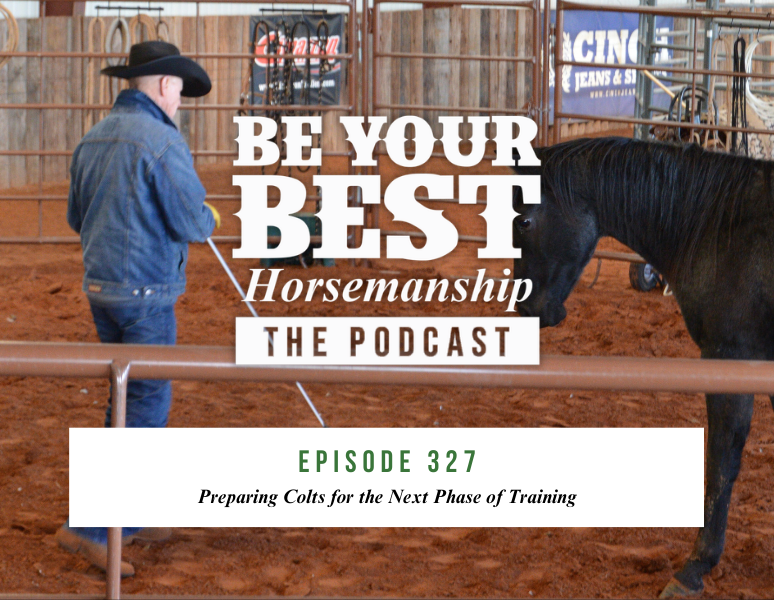
This week at our training facility, we’ve been spending a lot of time advancing some of the young horses we’ve got in training and preparing them for the next phase of their careers.
A year ago, before Road to the Horse, I bought a big set of colts — 13 or 14 coming two- and three-year-olds. Originally, that was to sharpen my colt starting through repetition and preparation for the competition. Road to the Horse was a bucket-list opportunity for me, but what it really did was force me to be intentional. I had to have a plan. I had to sharpen my skills. I had to put the work in.
Now those colts are three- and four-year-olds, and they’re ready to progress.
Some are tracking cattle. Some are working the barrel pattern. Some are going through pole drills. But no matter the discipline, the foundation is still the same: softness in the rib cage, control of the five body parts, and communication through the mind so we can ultimately control the feet — because the feet are everything.
The Role of Repetition and Preparation
As we’ve been advancing these rope horses, my interns have played a big role.
While I’m roping on one, they’re warming up the next. When I’m finished, they’ll take that horse and continue reinforcing the fundamentals — riding in the box, tracking slow cattle, riding in and out quietly.
You don’t need a rope in your hand to make a rope horse. In fact, a lot of the most important work happens without it.
They need to be comfortable in the box. They need to sit relaxed when the chute bangs. They need to move forward when asked — not because a gate slams open, but because you told them to go.
If the bang of the chute becomes the trigger, you’ve just trained a reactive response. Sprinting out of the box is a flight response. I don’t want that noise dictating when we leave. I want my horse relaxed, using the thinking side of their brain, and leaving when I ask.
That takes repetition. Small, sometimes almost invisible progression. But progression is progression — even if it’s minuscule.
Building Confidence — Not Forcing Results
We’ve got a gelding here we call Midnight. Super talented. Freaky athletic. But he’s scared of the chute. Scared of sudden noises. That’s not him being difficult. That’s instinct. Self-preservation.
So instead of pushing him over the edge, we build confidence. Ride into the box. Sit. Relax. Leave quietly. Come back. Repeat.
It’s okay if a horse isn’t comfortable. But, it’s not okay if they sell out on you. They’ve got to trust you enough to stay connected instead of putting their tail in the air and running through the bridle.
That trust doesn’t come from forcing them through something. It comes from structured, intentional exposure.
And everything counts — being tied up, activity around the barn, four-wheelers, manure spreaders, cattle moving. Training isn’t just when you’re in the saddle. It’s the entire environment.
Don’t Skip Steps
It’s easy to get caught thinking about the end result. Wanting it perfect. Wanting it fast.
That’s when people start picking at a horse all day. That never ends well.
You’ve got to be structured in your progression. There are a lot of things that need to be done without the rope before you ever pick it up.
Put the rope down. Build the foundation. Build the confidence. Gain the trust.
Then, when you pick the rope back up, make it easy.
If you have a true foundation, you can continue progressing — even when things get sticky. If you don’t have it, once you add speed, everything falls apart.
Speed will expose your feel, your timing, and your balance faster than anything else.
Influences and Staying a Student
I had a customer here for a private clinic last week. After leaving here, he went straight to a cow horse clinic with Chris Cox.
I couldn’t encourage that more. Find people who’ve survived the school of hard knocks. If someone’s been in this industry long enough and stayed successful, they’ve made mistakes. They’ve failed. They’ve figured things out. That knowledge is valuable.
When my interns asked who helped me learn all this, I told them the truth — there wasn’t a lot of help early on. There weren’t digital programs. There weren’t endless clinics. A lot of it was trial and error.
Today, there’s more opportunity than ever. And what’s interesting is this: the more advanced someone becomes, the better student they are. The most advanced clinic I’ve had in a while was also one of the best groups of students. They were soaking it up.
You’re not going to retain everything. If you retain 60%, you’re probably in the top 5%. But sometimes all it takes is one reminder — one small adjustment — and it sharpens you back up. It does me. Every time I come home from a clinic, I’m sharper. I’m thinking about what I need to do better.
Stay the Course
No matter the discipline — roping, barrels, cowhorse, ranch work — the process is the same:
Build the foundation.
Reinforce it daily.
Create confidence through repetition.
Be intentional about every step.
Keep the thinking side engaged.
Progress over perfection. Stay the course. Keep an open mind. Keep your ears open.
There’s always something to learn.