We finally made it through a pretty serious cold spell here in Oklahoma. I think we got somewhere around 13 or 14 inches of snow, and it stayed below freezing for close to ten days straight—which is unusual for us.
We needed the moisture badly, so I’m thankful for it. But I’ll tell you what, it felt good yesterday to finally get back outside and ride in some warmer weather. My interns and I kept riding through most of the cold spell. There were a couple days where it was just too frozen and too cold to safely do much, but for the most part, we kept grinding. And, that led to some really good conversations about something I think is important—learning how to create separators for yourself.
When Conditions Aren’t Ideal, Separators Show Up
Our indoor riding area isn’t huge—it’s a 60’ x 120’ space. So when the weather keeps you inside, you’re limited. You can still lope and get a few things done, but you’re not opening one up down the arena.
What happens during times like that is you naturally get pulled back into foundational work. And that’s not a bad thing. In fact, it’s often exactly what both the horse and the rider need.
Once we were able to get back outside, both interns commented on how good the horses felt. And that didn’t happen by accident. It happened because we spent time reinforcing the basics—softness, body control, timing, feel, balance, and clarity in our signals.
Those exercises are called foundational for a reason. They reinforce your connection, your communication, and your consistency. And that’s where separators start to show up.
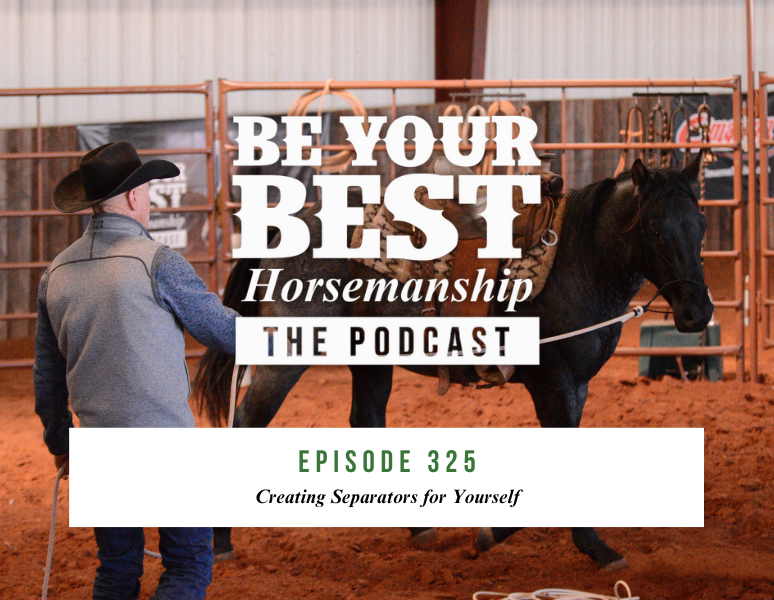
What Is a Separator?
I talk a lot about separators, and I want to be clear about something: a separator doesn’t always separate you from someone else. A lot of times, it separates you from the person—or trainer—you used to be.
When conditions are tough, when the weather’s bad, when progress feels slow, you’ve got a choice. You can back off, or you can find a way to keep moving forward—even if that progress is small.
That choice is a separator.
Attitude and effort matter in this business. There are going to be days that are uncomfortable, frustrating, and flat-out hard. That’s just part of working with horses. The people who continue to grow are the ones who find a way to keep building, even when the conditions aren’t ideal.
When Horses Don’t Let You Get Lazy
We’ve got two colts here right now from the same bloodline. They’re cow-bred, extremely handy, athletic, and talented. They’re also tight in their rib cages.
Both of them have taken my interns for a ride at one point or another—not running off, but getting stuck, grabbing the bridle, and losing softness for a moment. And I’ll tell you what: those horses won’t let you fake it.
You can’t be halfway good with them. You have to truly control the rib cage. If you lose that, you lose softness everywhere—especially in the face.
They’re a great reminder that if the horse is stuck in the rib cage, the feet aren’t going to follow the nose. You don’t really have control. That’s why I work so much on lateral softness, one-rein stops, and making sure that wherever the nose goes, the feet follow.
If the nose moves and the feet don’t, you don’t have much.
Growth Takes Time—and Horses Teach It
Yesterday, one intern was struggling with right-lead departures. One small adjustment in how she asked, and the horse picked it up immediately. Before that, it was missed multiple times.
That’s not failure—that’s learning.
There isn’t a horse alive that can’t pick up both leads. Watch them in the pasture. They do it all day long. The challenge is helping them understand what we’re asking for when we’re on their backs.
And the only way you learn how to do that is by riding a lot of horses.
If you only have one or two horses, that’s fine. You don’t need six. Just keep working through the same process and strengthen the connection. Don’t avoid the things you’re weak at—go find them and work on them.
The Journey Never Ends—and That’s a Good Thing
I rode all my number-one horses yesterday. And you know what we worked on? Foundational exercises.
Softness. Transitions. Body control. Connection. There’s not a horse on this place that doesn’t have the potential to get better. And that’s encouraging, not overwhelming. It means no matter where you’re at, there’s another level available.
I heard someone say once, “If you’ve got it all figured out, how come you don’t win more?” That stuck with me.
Anytime I think I’ve got it all figured out, I look at my horses and realize there’s still room to improve. And that’s what keeps me getting up every day and getting back in the saddle.
Make It Yours
One of the most important things I tell people—especially through our mentorship and certification programs—is this: make your program yours.
You can learn from me. You can learn from others. But at the end of the day, you need a program you believe in and understand. Confidence comes from ownership.
The people who succeed long-term are the ones who keep learning, stay humble, and continue to build separators—day by day, decision by decision.
So when things get tough, don’t look for a reason to stop. Look for the separator.