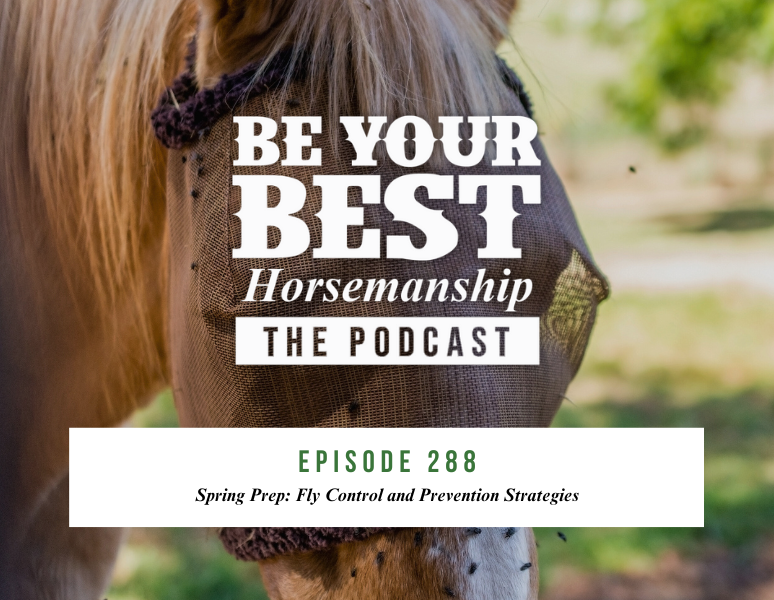
This episode is all about something that creeps up on us every spring—flies.
I sat down with my longtime friend and fellow horseman Mark Upton of Central Life Sciences to talk through practical ways to prepare for fly season. Between all the rain we’ve had lately and the warm weather kicking in, now’s the time to get ahead of the problem before it gets out of control.
Prevention Starts with Management
Flies aren’t just annoying—they can wreak havoc on your horses’ comfort and mindset, especially when you’re trying to tie them up, haul them, or focus on a solid training session. And when you’ve got young horses like I do, the last thing you want is for them to associate being tied or scored in the corner with getting swarmed.
Mark shared that stable flies and house flies are the biggest concern for horse folks. They lay their eggs in rotting organic matter—manure piles, trampled hay, wet grass clippings. First step in your prevention plan? Clean up those areas.
Simple management tips that make a huge difference:
Haul off manure piles regularly
Drag or burn old hay piles
Mow tall grass around barns and pens
You don’t need to spend a dime to start tackling the problem.
Know Your Tools: The 3-Pronged Approach
Once your place is clean, there are three main lines of defense you can use to control flies effectively:
1. Kill Adult Flies
Mark walked me through some of the Starbar Products I use religiously at my place—especially the QuickStrike fly abatement strips and the fly bait concentrate spray. Those strips work wonders in a 5-gallon bucket, and the spray is easy to apply around the barn, patio, or arena. We even use it at our dog kennel. It’s safe, it works, and most importantly—it keeps my horses comfortable when they’re tied or in the exercise pen.
2. Keep Horses Clean
A clean horse is a less attractive target for flies. We use Vetrolin body wash and shampoos from Farnam almost daily during the summer, and they make a noticeable difference in how long horses will stand tied without being fussy. Combine that with laser sheen concentrate for manes and tails, and you’ve got a well-rounded grooming program that supports fly control too.
3. Use Feed-Through Products
For long-term control, Clarifly (equine and bovine safe) or Simplifly are excellent feed-through options that treat the manure itself. Flies never get a chance to mature when you control the larvae before they hatch.
If you’ve got roping cattle near your horses, Mark recommends Altosid mineral tubs to keep horn flies from jumping from steers to horses. Just be sure to use species-specific supplements—what’s safe for cattle might not be for horses.
Flies Affect Training More Than You Think
One of the biggest takeaways for me is how closely fly control is tied to horsemanship. When horses are distracted or anxious from flies, it shows up in the little things—tail swishing, foot stomping, inability to relax while tied or in the box.
With young horses, every interaction matters. If the corner becomes a place they dread because they get eaten up by flies, it’s going to be that much harder to build confidence and consistency there. So whether you’re roping, tying, hauling, or just spending time around your horses, don’t underestimate how much fly control can affect your progress.
Maintenance Matters Too
Even with a good prevention program, flies are persistent. Keeping products like fly sprays (Bronco Gold and Endure are our go-tos) close at hand—in the barn, at the arena, by the chute—makes it easier to stay on top of it. Mark also reminded me how important it is to rotate sprays to avoid resistance.
Bottom line? Put the products where you need them. If you’ve got to walk back to the barn ten times a day to grab fly spray, you’re less likely to use it. Make it easy on yourself—and your horses will thank you for it.
We’re in the perfect storm for insects right now, and it doesn’t take much to get overwhelmed if you let it go. But with a little bit of consistency and some smart prevention, you can stay ahead of the game.
Thanks again to Mark for joining me on the show. I appreciate all of you tuning in, and I hope this post helps you keep your horses feeling good and focused this season. Until next time—be your best.